
Who we are and what we do
New Zealand Mines Rescue Service is starting to share more of its work. This first article covers what the service is, what it does, and what is coming up.
New Zealand Mines Rescue Service (NZMRS) will publish regular updates from this month through this news section, LinkedIn and Facebook. Much of what the service does happens out of public view, on mine sites, in the training tunnel and at its two rescue stations. This article is a starting point for anyone who wants to follow that work.
What the service is
NZMRS is the national emergency response organisation for New Zealand's mining and tunnelling industries. It operates under the Mines Rescue Act 2013 as a charitable trust, funded through an industry levy set under the Act and by its commercial training and specialist services.
The Act gives the service two core functions. The first is emergency preparedness: helping operators develop, review and test their emergency management plans. The second is emergency response readiness: training, equipping and maintaining rescue teams so they can respond when called on.
The service operates from two stations, Rapahoe on the West Coast, which is also head office, and Huntly in the Waikato, with equipment held at other key locations around the country.
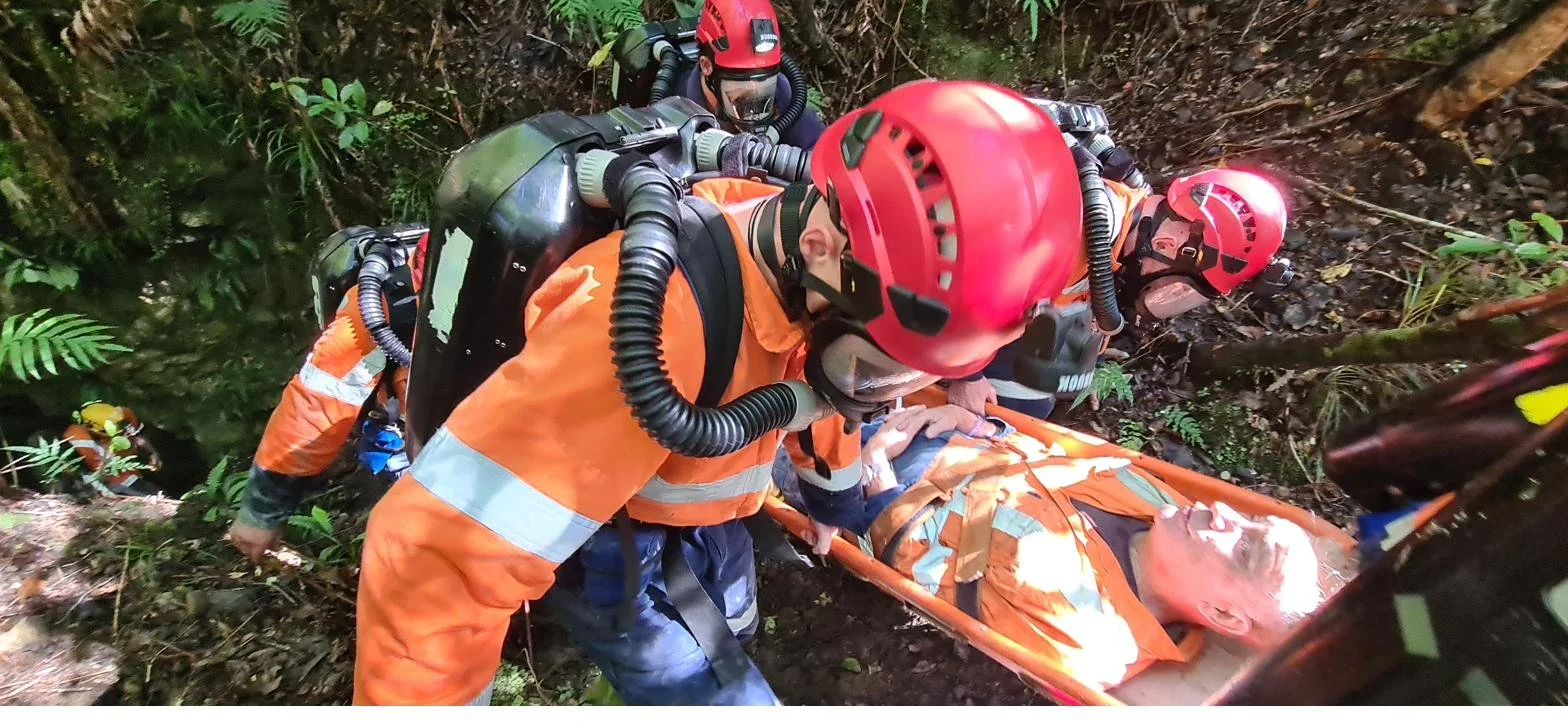
What sets NZMRS apart from other emergency services is the ability to work for long periods in irrespirable atmospheres. Rescue teams train and operate in long-duration breathing apparatus, which allows them to keep working after a fire, explosion or gas event in conditions where other services cannot remain.
What the work looks like
Emergencies are rare. Most of the service's work is making sure operators and rescue teams are ready before one happens.
That means working with mine and tunnel operators on their emergency plans and running exercises to test them. It means keeping rescue teams trained and their equipment maintained, from breathing apparatus and gas monitoring through to the vehicles that get teams and gear to site.
NZMRS is a member of the International Mines Rescue Body, which keeps the service connected to rescue organisations, and to lessons from incidents, around the world.
Training
NZMRS has been an NZQA-registered private training establishment since 2011 and holds consent to assess against around 100 unit standards. Courses range from mining inductions and Introduction to Mining through to working at heights, confined space entry, gas testing, rope rescue, first aid, incident management (CIMS) and Certificate of Competence training. Clients come from mining, tunnelling and quarrying, and increasingly from other industries that face the same hazards.
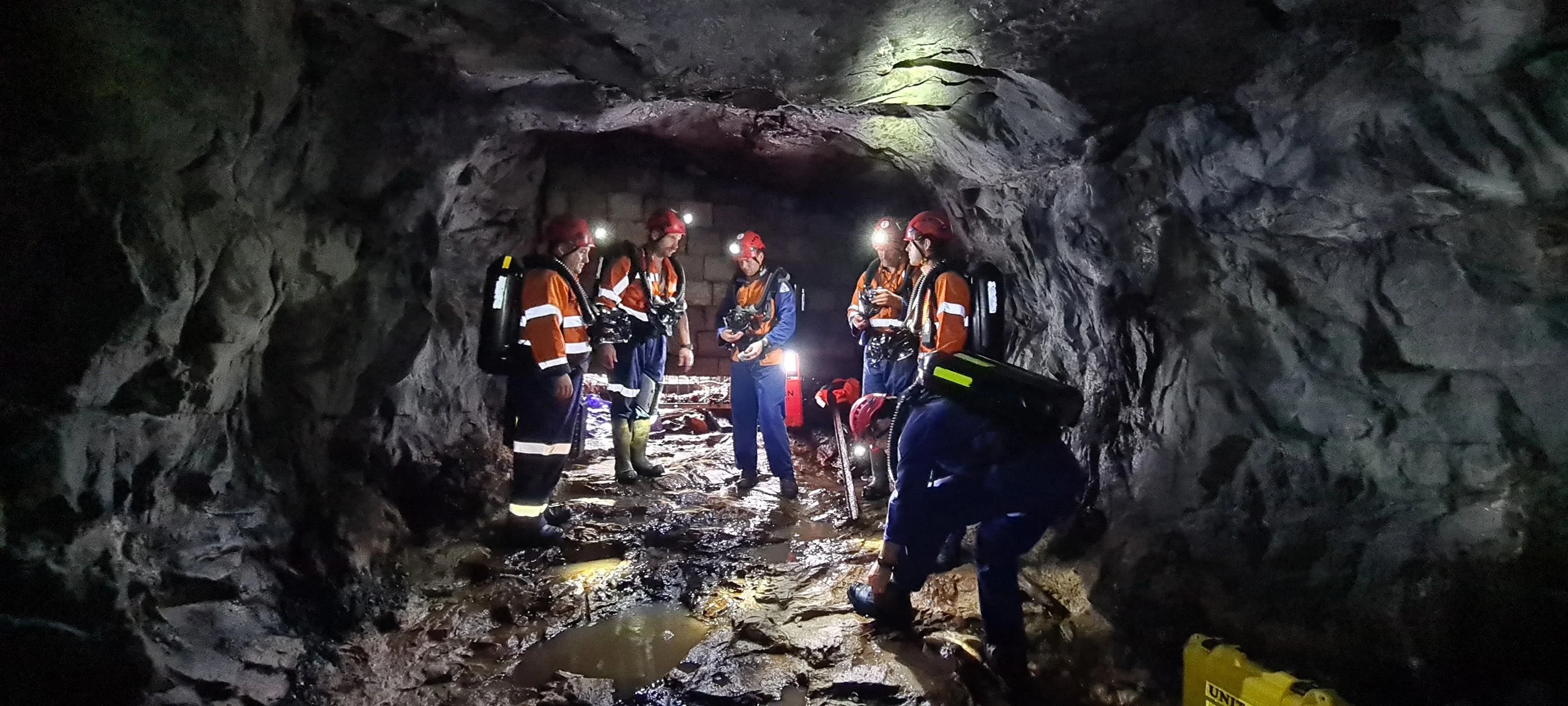
Training facilities include an underground training tunnel and a working at heights tower, so people learn in realistic conditions rather than only in a classroom.
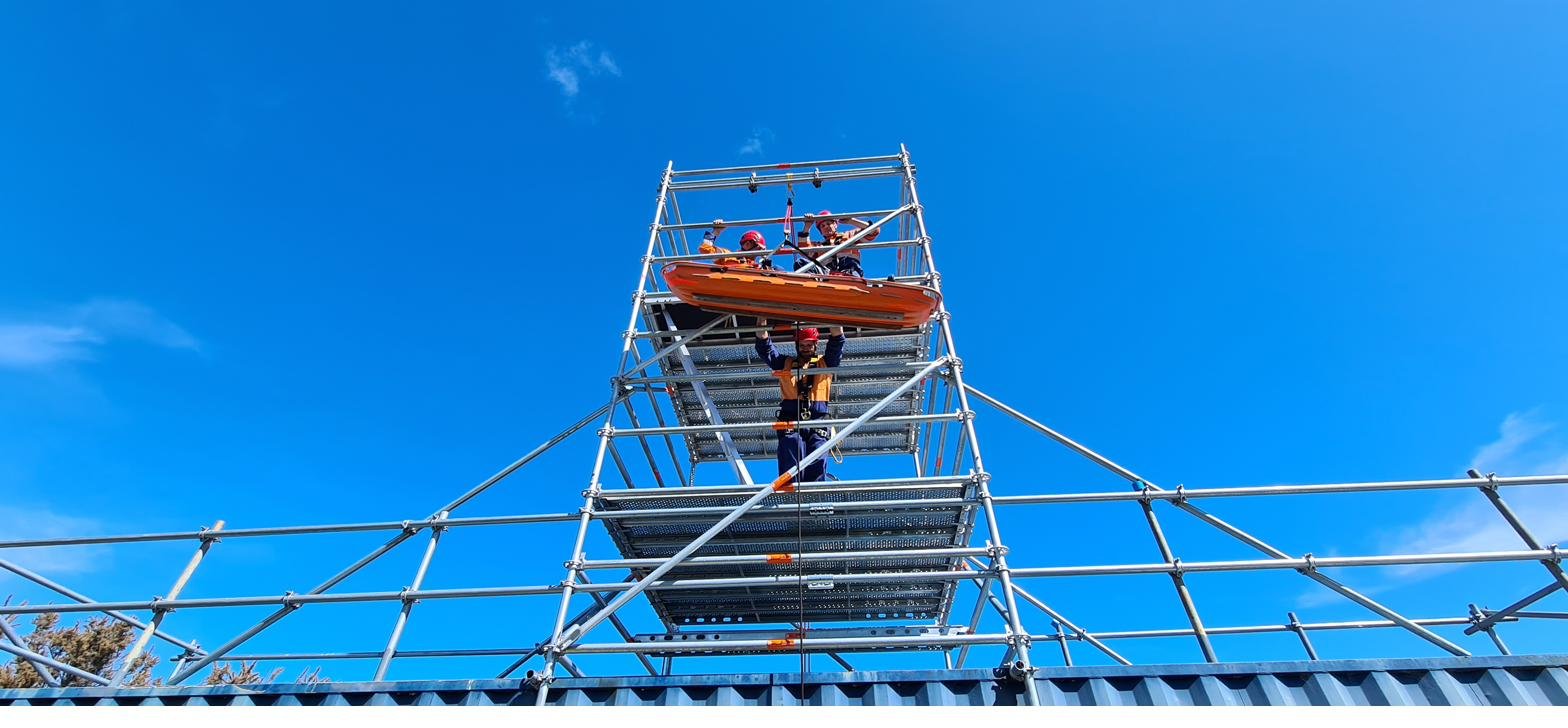
NZ Mines Rescue crews lower a stretcher from the training tower.
Where the service comes from
NZMRS was set up on the recommendation of the Royal Commission into the 1926 Dobson mine disaster, in which nine men died. The first rescue station opened at Dobson in 1930, with stations following at Granity, Huntly and Ohai. The Mines Rescue Trust Act 1993 put the service on a statutory footing with industry levy funding. The Mines Rescue Act 2013 followed the Royal Commission on the Pike River Mine tragedy, which recommended that the service's activities be supported by legislation.
New leadership
Matt Beavon took up the role of Executive General Manager in May 2026, following the retirement of Trevor Watts. Matt’s background is in emergency response and emergency management: more than a decade with Fire and Emergency New Zealand and instructor in rope rescue and a member of Urban Search and Rescue, followed by readiness and response roles with West Coast Civil Defence Emergency Management. He also volunteered as a crewman with the West Coast Rescue Helicopter.
"Most people only think about Mines Rescue when something has gone wrong," Matt says. "The bulk of our work is the opposite. We help operators plan and test their response before it's needed, we train the people who work underground and at height, and we keep our own teams ready. That work is worth showing, and that's what this news section is for."
What's ahead
Later this year NZMRS will host a national mines rescue competition, the first since 2014. Details will be published here as they are confirmed.
Follow our work
Updates will be posted here and on the NZMRS LinkedIn and Facebook pages.
Training enquiries: training@minesrescue.org.nz or 03 762 7828.
General enquiries: info@minesrescue.org.nz.